About the cathedral

History of Holy Trinity Cathedral

Karakol, 16 Gagarin St · consecrated in 1895

About the cathedral

From a felt tent to a five-domed cathedral

The history of the cathedral traces back to the founding of Karakol itself by the far-sighted and pragmatic traveller Alexander Kaulbars. He initiated the construction of a temporary felt church — felt being the material almost everything was built from at the time. Within a year the felt walls were replaced with wooden ones, and later with stone and brick.

Unable to withstand fires and the 1889 earthquake, the church building was destroyed almost to its foundation. A new five-domed wooden church with a bell tower was built to a special design by the local Maslikov merchant family and consecrated in 1895. By then the city was called Przhevalsk: in 1889 it was renamed after the explorer Nikolai Przhevalsky, buried nearby on the shore of Lake Issyk-Kul (the name Karakol was finally restored in 1991). Their original plan called for a cross-shaped church, crowned by five domes and a bell tower forming one small but unified, compact building.

Snow-white walls with carved blue inlays and frescoes depicting flowers and clusters of berries created a sense of pristine purity, while the richly detailed iconostasis and modest interior truly made this place the house of God. The church was also an important centre of learning — its library held more than 1,000 books.

The Soviet period and revival

130 years of history

Early 20th century
During the widespread destruction of the Orthodox Church, the cathedral is closed and later completely looted. Icons, altar books, and works of art disappear without a trace.
1944
After the state decree "On the Procedure for Opening Churches" is adopted, the first restoration works begin at the building, which by then served as a military-party club — but they didn't last long, restoring only one of the five domes.
1961
The church remained half-restored until this year. The building is taken away again for 30 long years: believers are given warehouse space at a disused bread factory on the edge of town, the church grounds are handed to a children's sports school, and a gym is set up inside the building itself.
1989
A decision is made to set up a local history museum in the church — the plan was to collect legends and tales about the city and display ancient finds. Due to the changing political situation, these plans were never realized.
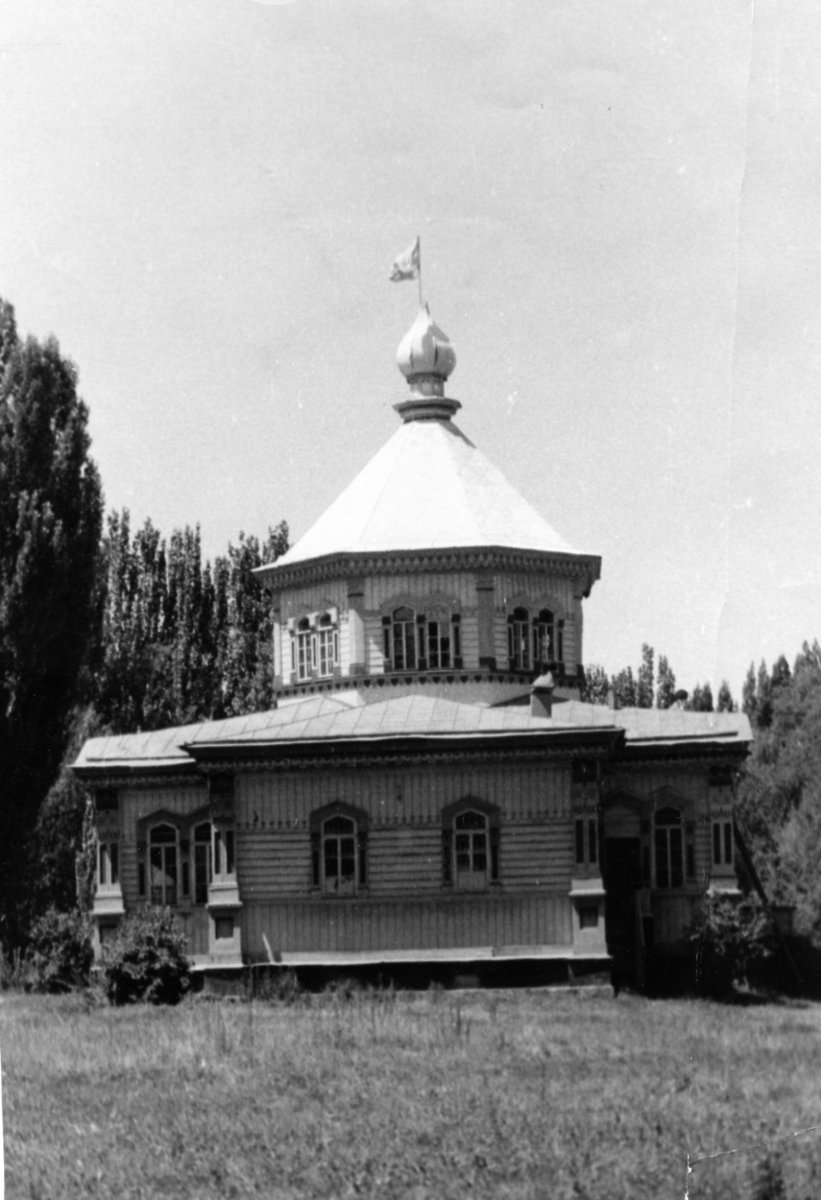
Holy Trinity Cathedral in Karakol during the Soviet period
1992
After long disputes, church clergy and parishioners managed to reclaim the dilapidated, half-rotten church building and its neglected, looted grounds.
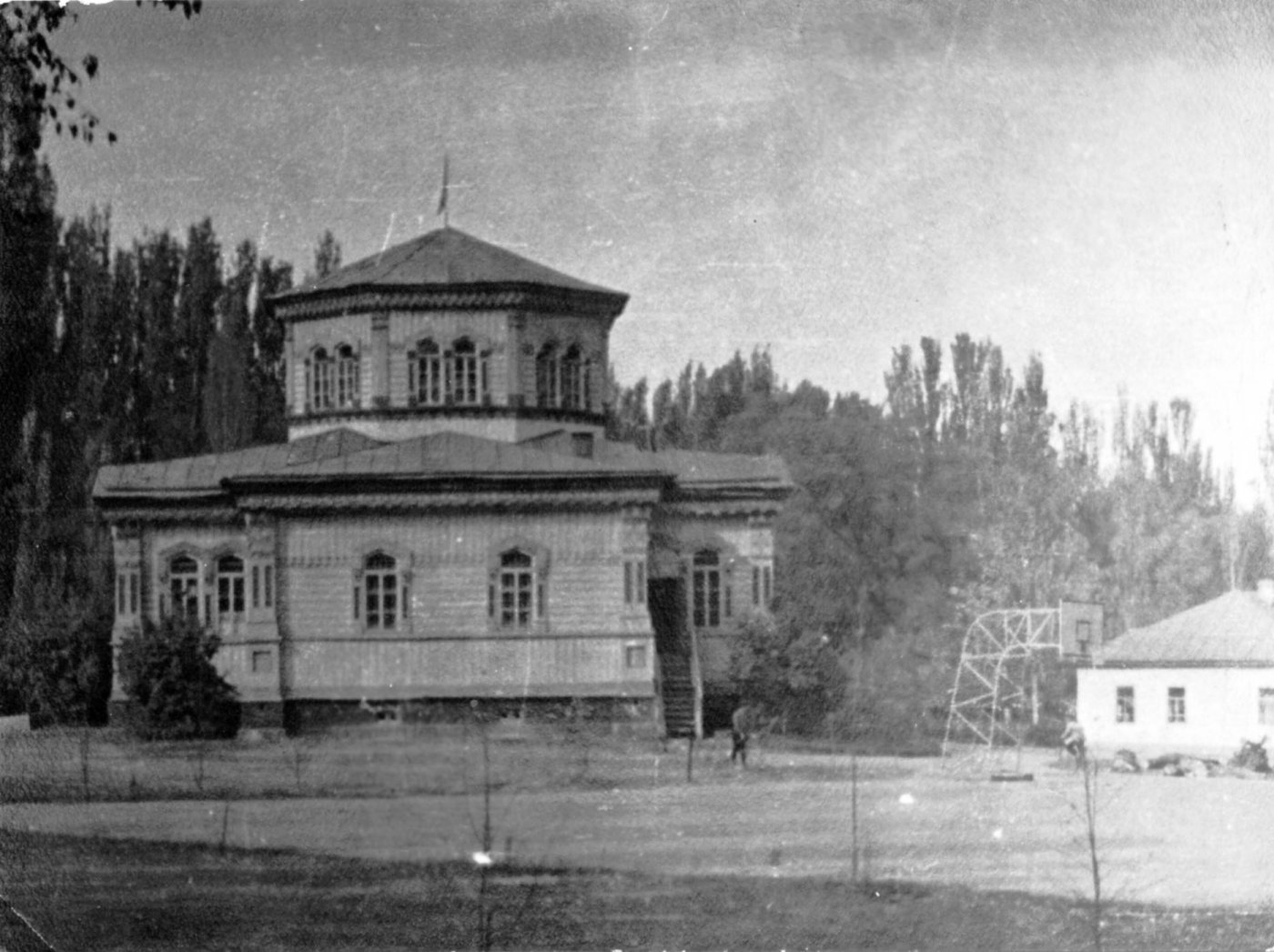
The church before restoration, Karakol
1992–1995
Restoration work to rebuild the church and recreate its appearance continued for three years — the achievement of ordinary townspeople, whose efforts and voluntary donations paid off. The church was returned to the parish's ownership in 1995.
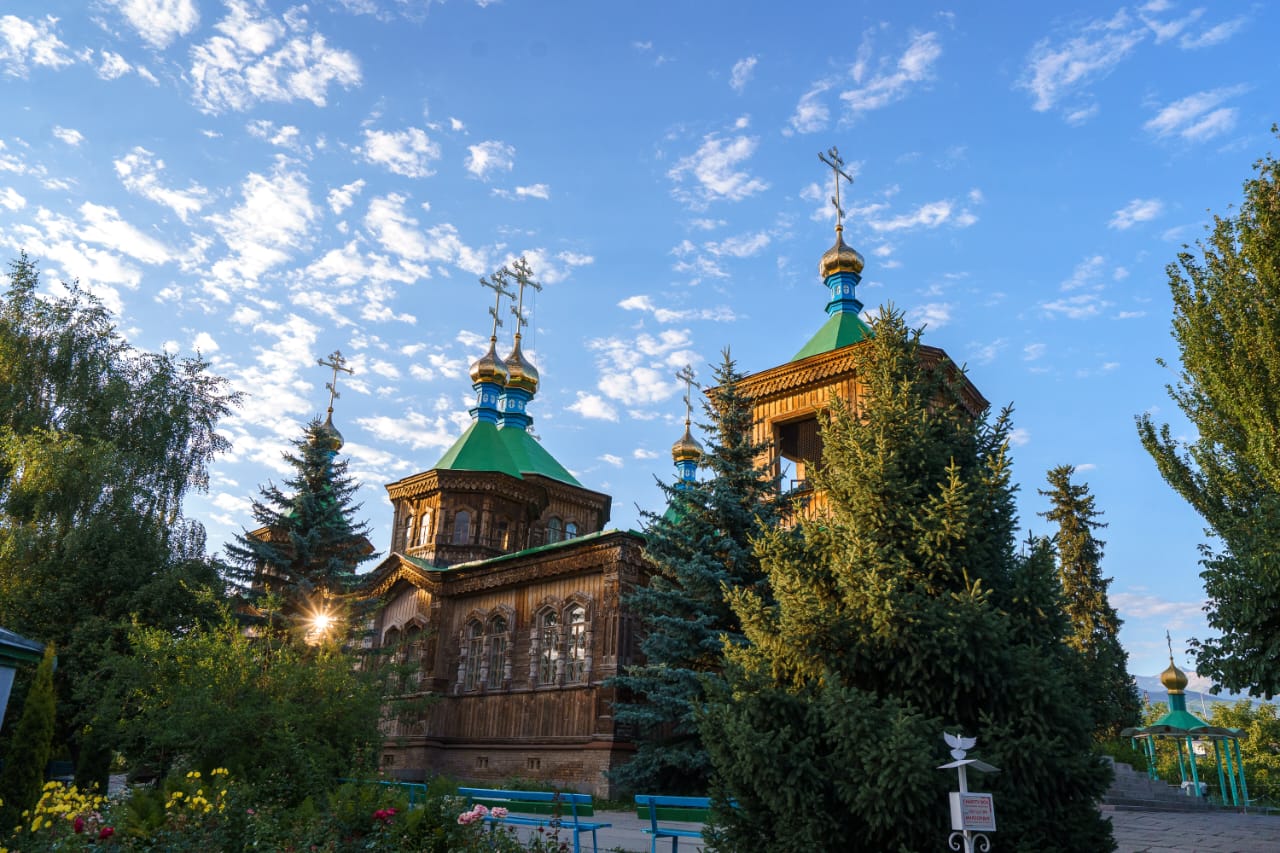
Today

The cathedral today

The cathedral's modern appearance has changed little. The same five gilded, cross-topped domes traditional to this church, the familiar bell tower reached by a long internal staircase, and the intricate ringing of many large bells and small chimes. The log walls of the church and the main granite porch give it a majestic, authentically Orthodox look.

A church steadfast in spirit and will — its short, century-long history full of hardship and sorrowful events.

Holy Trinity Cathedral today, 16 Gagarin St, Karakol
Holy Trinity Cathedral today — 16 Gagarin St, Karakol
Karakol's cultural heritage

Part of the city's larger history

Holy Trinity Cathedral is an example of the Turkestan wooden Orthodox architecture style that emerged after the 1889 earthquake thanks to architects Zenkov and V. Heinzelman, at a time when wooden churches were no longer being built in Russia itself. Materials prepared as part of the "Heritage of Karakol" initiative.

The "Heritage of Karakol" project — Youth Volunteer Organization "Leadership", supported by the Issyk-Kul Regional State Archive and "Wave of Issyk-Kul" radio station.
Visiting the cathedral: tips for visitors →